

Moving estimate types affect how your final moving charges are calculated. A binding estimate generally sets a price for listed services and belongings. A non-binding estimate is an approximation that may change. A not-to-exceed estimate sets a written price limit, but its exact terms matter.
Introduction
Before choosing a mover, understand what the estimate promises—and what it does not. The name of an estimate alone may not explain every fee or condition. Therefore, review the written document, inventory, and services before signing.
Rules may differ for local moves and interstate household shipments. For interstate moves, check the Federal Motor Carrier Safety Administration’s consumer moving guidance. This article offers general information, not legal advice. For help preparing details for an estimate, see our guide on getting an accurate moving quote.
Moving Estimate Types at a Glance
| Estimate type | What it generally means | What to confirm |
|---|---|---|
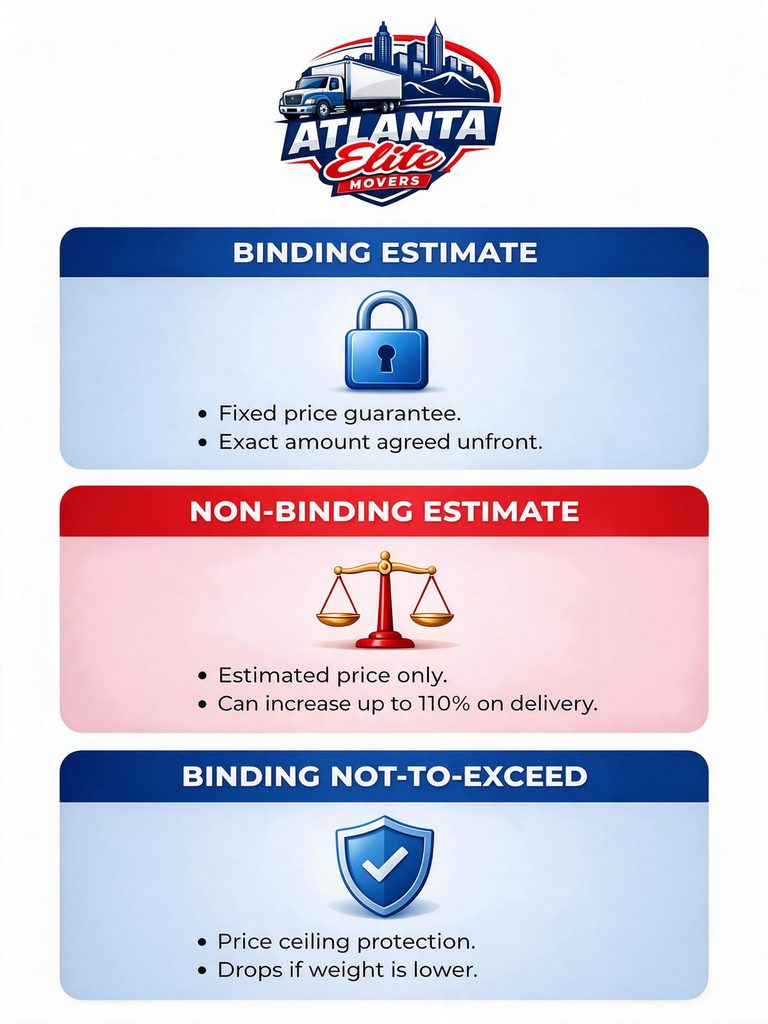
| Binding | A written price for the listed shipment and services | Which changes or extra services could affect the price |
| Non-binding | An estimate, not a guaranteed final price | How the final charge is calculated and when payment is due |
| Not-to-exceed | A written maximum price under stated conditions | Whether the final charge can be lower and what the cap covers |
These labels can be used differently by companies. Consequently, ask the mover to explain the specific terms in your contract.
What Is a Binding Moving Estimate?
A binding estimate is a written price based on the inventory and services listed in the agreement. It can help you plan because the stated price generally applies when the shipment and requested services remain as described.
However, the price may be affected if you add belongings or request services that were not included. Before signing, check how the mover handles changes, packing, access issues, and other additions. Also confirm that the inventory is complete.
If you are comparing a fixed quote with hourly pricing, read our guide to hourly-rate versus flat-rate moving quotes.
What Is a Non-Binding Moving Estimate?
A non-binding estimate is an approximation. The final charge may depend on the actual services, time, or shipment details specified in the agreement.
For interstate household moves, federal rules generally limit what a mover may require you to pay at delivery to 110% of a non-binding estimate. The remaining balance may be collected later under applicable rules. Review the current FMCSA guidance and your contract for details.
For local hourly moves, ask how labor time, travel, minimum hours, and extra services are billed. Our guide explains how much movers charge per hour.
How Does a Not-to-Exceed Estimate Work?
A not-to-exceed estimate generally sets a maximum price, subject to the written conditions. Some agreements may charge less if the actual shipment or services cost less. However, do not assume that applies unless the contract clearly says so.
“Not-to-exceed” may not be a separate, standardized estimate category under every rule or contract. Therefore, ask the mover to write down:
- The maximum price and what it includes.
- Whether the final price can be lower.
- Which inventory or service changes could affect the cap.
- How additional services must be approved.
How to Compare Moving Estimate Types
Compare written estimates using the same inventory and service list. Otherwise, a lower quote might simply exclude services included elsewhere.
Before choosing, check:
- Inventory: Are all rooms, storage areas, and large items listed?
- Services: Are packing, materials, disassembly, and delivery included?
- Access: Are stairs, elevators, parking, or long carries addressed?
- Price terms: Is the amount binding, approximate, or capped?
- Changes: What happens if you add items or request extra services?
- Payment: When is payment due, and which payment methods are accepted?
Also review our guide to hidden moving fees so you know what charges to ask about.
Which Estimate Should You Choose?
The best option depends on your move, the services required, and the contract terms. A binding estimate may suit someone who values a stated price for a clearly listed shipment. A non-binding estimate may be based on actual billable details. A not-to-exceed agreement may offer a written ceiling if its conditions are clear.
For local or interstate moves, never choose based only on the estimate’s label. Compare the full documents and ask questions about anything unclear. Atlanta Elite Movers offers residential moving services. To discuss your move and request a free quote, contact our team.
Frequently Asked Questions
Can a binding estimate change?
It may be affected by changes to the inventory or requested services. Review the written agreement to understand which changes require a revised estimate.
Is a non-binding estimate a guaranteed price?
No. It is generally an approximation. The final charge depends on the applicable rules and the services or shipment details in the agreement.
Is a not-to-exceed estimate always cheaper?
Not necessarily. It sets a maximum under stated conditions, but the pricing method and possibility of a lower final charge depend on the written terms.
Do the same rules apply to local and interstate moves?
Not always. Federal rules apply to interstate household shipments; local moves may follow different state or local requirements. Check the applicable rules and your contract.

