
A step-by-step expert guide to navigating narrow doorways, hallways, and staircases without damage to your furniture or home.
Moving large furniture through tight spaces requires measuring all dimensions before you start, disassembling removable parts such as legs, shelves, and doors, using furniture sliders and moving straps to control heavy loads, and pivoting or tilting pieces at angles to clear narrow doorways. Protecting floors and walls with blankets and corner guards prevents costly damage. When a move is too complex or risky, hiring a professional furniture moving service is the safest and most efficient solution.
Few moving challenges test patience and problem-solving skills quite like moving oversized furniture through a cramped apartment hallway, a narrow Victorian doorframe, or a winding staircase. One wrong angle and you risk gouging hardwood floors, cracking drywall, or injuring yourself. Whether you are relocating across Atlanta or simply rearranging your home, the techniques in this guide are the same ones used by the experienced crews at Atlanta Elite Movers’ furniture moving service every single day.
1. Measure Everything Before You Start
The single most important step in any tight-space furniture move is also the one most people skip: taking accurate measurements. Guessing leads to stuck sofas, scratched frames, and significant frustration.
The Three Measurements That Matter Most
- Furniture dimensions: Measure height, width, and depth of the piece with all attachments in place. Note the diagonal dimension as well, because that is often what determines whether a piece can clear a doorway when tilted.
- Doorway clearance: Measure the opening width (door removed) and the door frame height. Standard interior doors are 80 inches tall and 32-36 inches wide, but older homes can be narrower.
- Hallway and stair width: Measure the narrowest point in the path the furniture must travel, including any light fixtures, handrails, or trim that protrude into the space.
Write all measurements down and compare them on paper before lifting anything. A quick sketch of the floor plan, including the path from room to exit, will reveal obstacles in advance and save hours of trial and error on moving day.
It is also worth measuring any elevator opening if you are in a multi-story building. Elevator cabs vary significantly in depth, and some require furniture to be stood on end to fit at all.
2. Disassemble What You Can
Modern and mid-century furniture is often designed with disassembly in mind, but even older solid-wood pieces frequently have removable components. Taking things apart before the move is almost always safer and faster than wrestling a fully assembled piece through a doorway.
What to Remove First
- Legs and feet: Most sofa, bed, and table legs unscrew in seconds. Removing them can reduce the height of a sofa by four to seven inches, which often makes the difference in a tight stairwell.
- Drawers: Empty drawers add surprising weight and shift the center of gravity awkwardly. Pull them out, wrap them separately, and carry them independently.
- Shelves and glass panels: Bookcase shelves, cabinet doors, and glass inserts should always be removed before moving the frame. This reduces weight and eliminates breakage risk.
- Headboard and footboard: Bed frames almost always separate into manageable sections. Disassemble completely before attempting to move through narrow spaces.
- Sectional sofa pieces: Sectional sofas typically come apart at connecting clips. Separating the sections turns one enormous obstacle into two manageable ones.
3. Essential Tools and Equipment
Having the right equipment before you start transforms a muscle-straining ordeal into a controlled, methodical process. The professional crews at Atlanta Elite Movers arrive fully equipped, but if you are doing a DIY move, these are the tools worth having on hand.
Moving Equipment Checklist
- Furniture sliders (felt for hardwood floors, plastic for carpet)
- Moving straps or shoulder harnesses for heavy lifting
- Appliance or furniture dolly with straps
- Thick moving blankets or furniture pads
- Stretch wrap or shrink wrap to hold blankets in place
- Corner guards for door frames and wall edges
- Painter’s tape to mark measurements on floors
- Basic toolkit: screwdrivers, Allen keys, adjustable wrench
- Protective floor runners for hardwood and tile areas
- Rubber gloves for grip when carrying smooth-surfaced pieces
Furniture sliders are particularly valuable. Placed under each leg or corner of a heavy piece, they allow one person to glide a 300-pound dresser across a hardwood floor with minimal effort and zero scratching. Moving straps shift weight from your hands and back to your hips and shoulders, dramatically reducing the risk of injury when lifting heavy loads through constrained spaces.
If cost is a concern, you can compare professional moving rates against rental equipment fees. In many cases, a professional team is surprisingly cost-competitive once you factor in truck rental, equipment rental, and the value of your own time and risk.
4. Navigating Narrow Doorways
Doorways are statistically the most common point of failure in any furniture move. The techniques below are used by professional movers to clear nearly any standard piece through nearly any standard doorway.
The Hook Method for Sofas
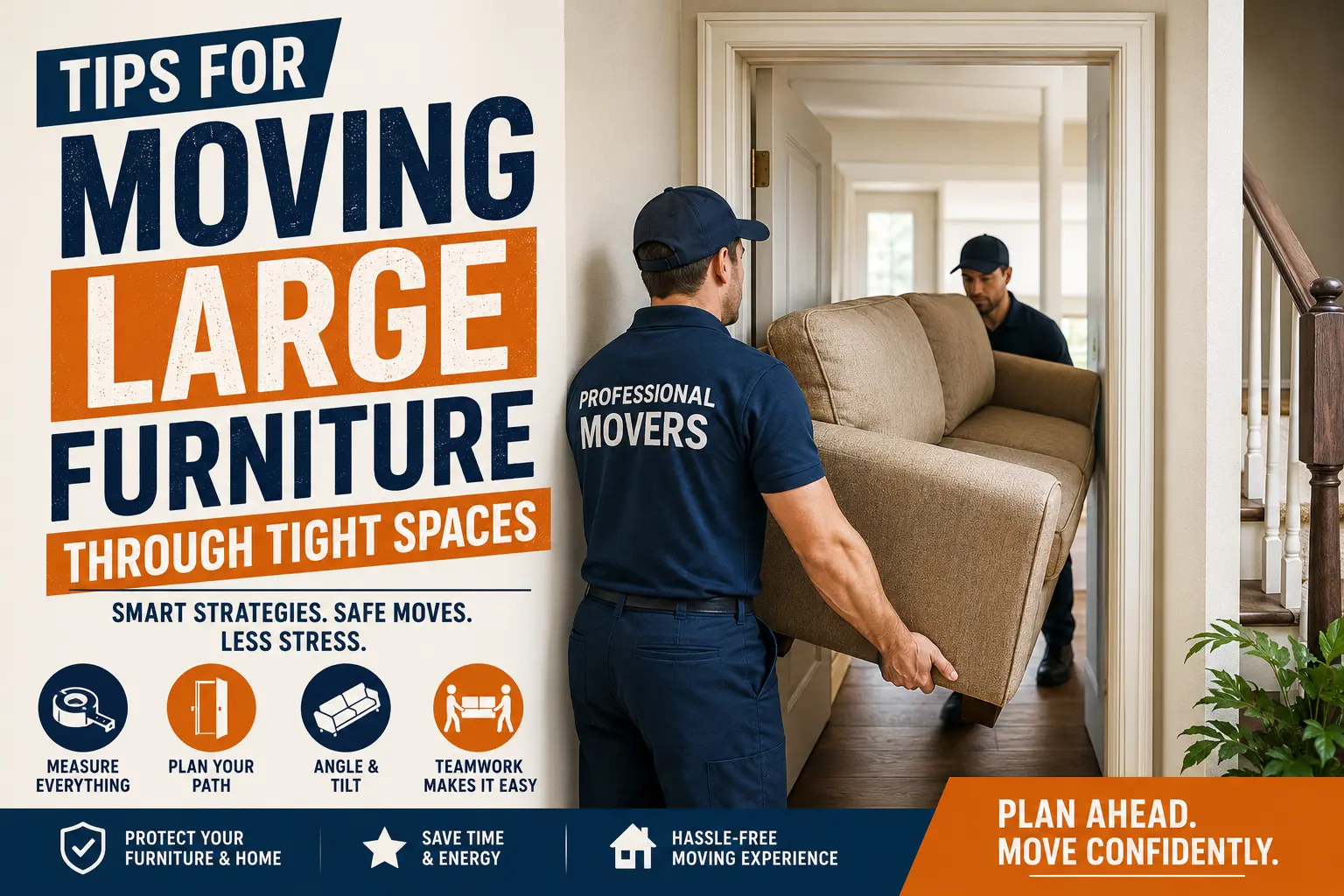
Stand the sofa on its end vertically if the ceiling height allows. Lead the top of the sofa through the doorway first at an angle, then swing the bottom through in a hooking motion. This technique, sometimes called the “turn and hook,” works on most three-seat sofas that would otherwise be too long to carry straight through.
Removing the Door
When a doorway is borderline, removing the door from its hinges gains you an extra 1.5 to 2 inches of clearance, which is often just enough. Use a hammer and flat screwdriver to tap hinge pins upward. Store the door and hardware safely and rehang it after the move is complete.
Diagonal Carry Technique
Many rectangular pieces such as dressers and bookcases can be tilted to a diagonal angle to reduce the effective height that must clear the doorway header. A dresser that is 68 inches tall can often clear a 78-inch doorway if tilted to roughly 30 degrees, depending on its width.
5. Handling Tight Hallways and Corners
Long hallways with a turn at the end present a different challenge than a simple doorway. The effective turning radius of a piece depends on both its length and the width of the hallway, and sometimes basic geometry says the move simply cannot be made in one direction.
The Pivot Method
For long pieces such as dining tables or wardrobes, position the item at a 45-degree angle to the hallway opening, lead one end into the hallway, and pivot it through the corner. This works best with a two-person team where one person controls the front while the other guides the rear pivot point.
Vertical Carrying
Tall, narrow pieces like bookcases or armoires are often best navigated through tight hallways by carrying them vertically. This reduces the footprint to the thinnest dimension and makes corners much more manageable. Two carriers, one above and one below, maintain control while a third person guides the path if available.
The Slide and Glide Approach
For extremely heavy pieces, furniture sliders on a smooth floor allow you to inch a piece around a corner with precision that simply is not possible when carrying. The controlled motion reduces the chance of sudden shifts that crack door frames or scuff walls.
Our teams serving Sandy Springs, Roswell, and Lawrenceville regularly navigate older homes with non-standard hallway widths and multi-landing staircases, and these three techniques form the foundation of every successful move.
6. Moving Furniture on Staircases
Staircases amplify every challenge. You are working on an incline, with reduced footing, often around a turn, and the consequences of losing control of a heavy piece are serious. This is the scenario where the risk-benefit calculation for hiring professionals shifts most dramatically.
Staircase Safety Fundamentals
- Never carry alone on stairs. Heavy furniture on a staircase always requires a minimum of two people and ideally three for anything over 100 lbs.
- Use a stair-climbing dolly for refrigerators, washing machines, and extremely heavy dressers. These specialized dollies have stepped wheels designed to roll up and down stairs with a controlled action.
- Communicate constantly. One person calls the steps, counting down and calling turns. Silence during a stair carry is how injuries happen.
- Move slowly and deliberately. Momentum is the enemy on stairs. One careful step at a time, fully planted before the next move, prevents slips and drops.
- Keep the heavy end low on the descent. The stronger carrier takes the bottom position when moving downstairs, bearing the weight on their back and core rather than their shoulders.
Spiral and Winding Staircases
Spiral staircases present a unique problem because the turning radius is fixed and very tight. For these situations, the only practical non-professional solution is often hoisting through a window using a furniture strap and pulley, which itself carries significant risk. In most spiral staircase scenarios, professional movers with crane straps or hoist equipment are the appropriate choice.
7. Protecting Walls, Floors, and Furniture
Damage to the home is just as costly as damage to the furniture. A well-executed furniture move accounts for protection at every contact point along the entire path.
Wall and Door Frame Protection
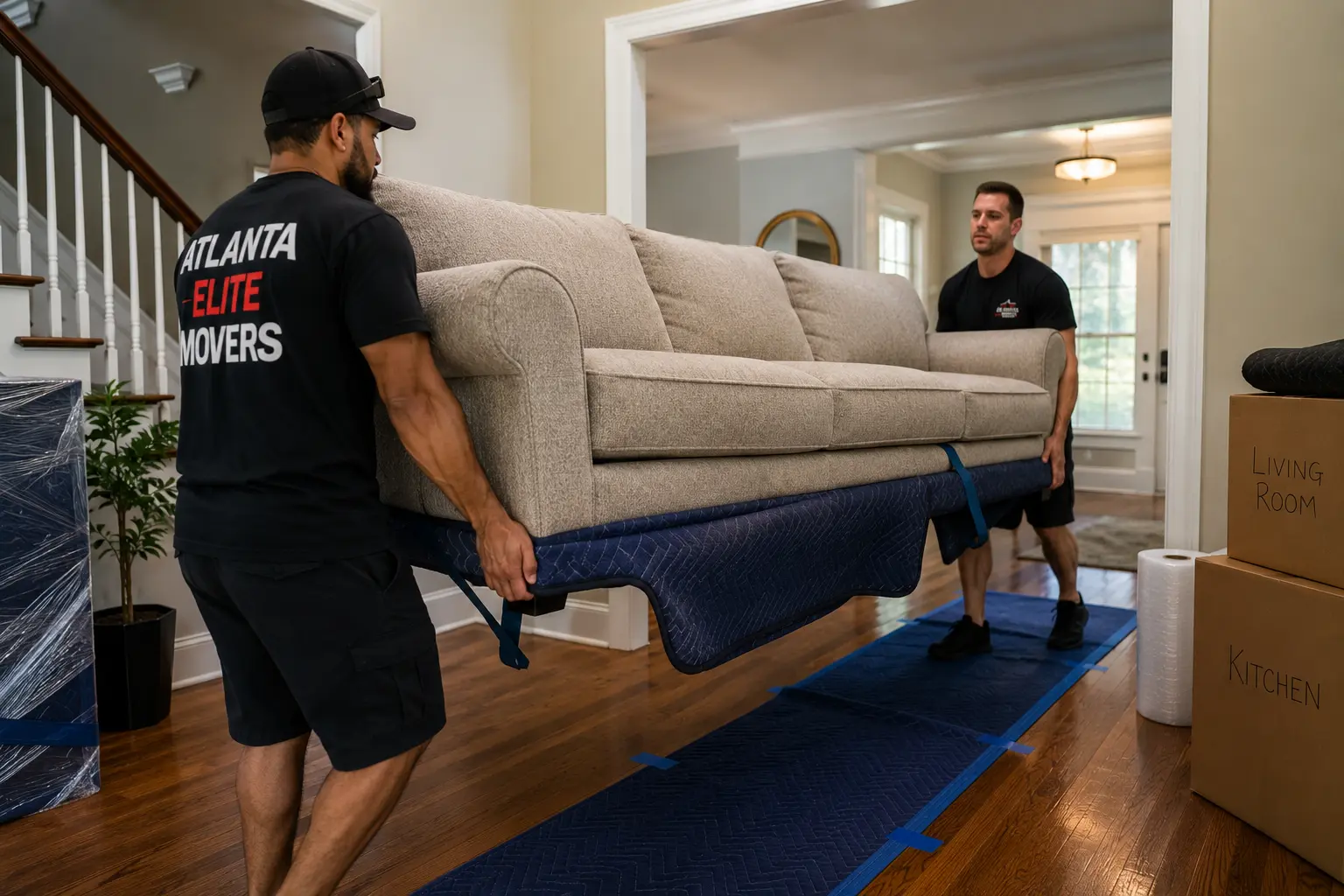
Foam corner guards attach to door frame edges and inside corners with painter’s tape and absorb glancing impacts that would otherwise dent or split wood trim. For wide pieces, wrap additional furniture blankets around the leading edges before attempting entry through any doorway.
Floor Protection
Lay down protective floor runners, thick moving blankets, or commercial ram board along the entire travel path before starting. On hardwood floors, even a single pass with a heavy piece on an unprotected surface can leave permanent scratches. On tile, unprotected dragging chips grout and cracks tiles at the edges.
Furniture Protection
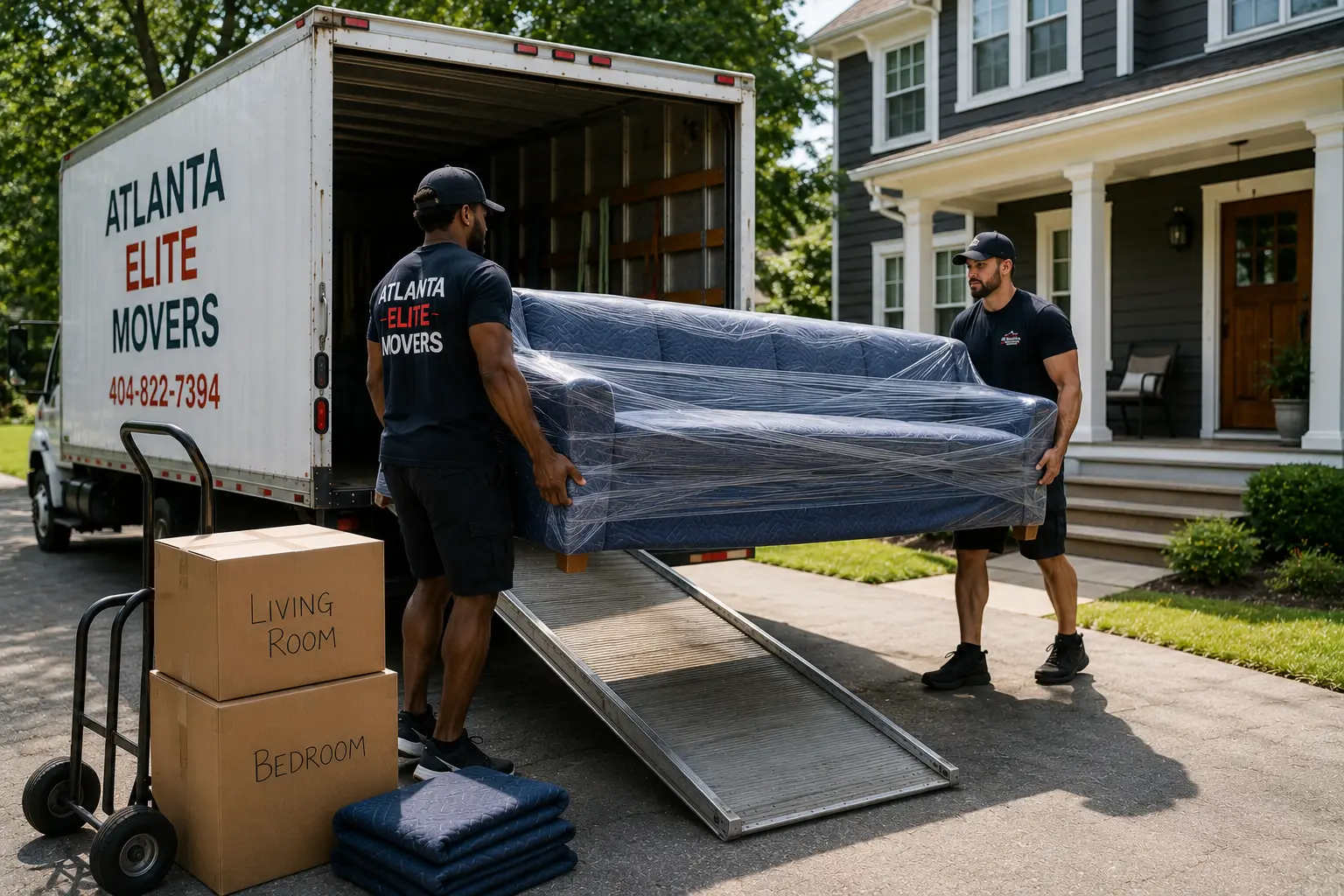
Wrap every surface of large furniture in moving blankets held in place with stretch wrap. Pay particular attention to corners, which are the most vulnerable points. Glass surfaces should have a full layer of packing paper followed by a blanket, and fragile wood veneers benefit from a final layer of stretch wrap over the blanket.
For antiques, custom pieces, or items with high monetary or sentimental value, the experienced team at Atlanta Elite Movers’ specialty furniture service uses custom crating and climate-controlled transport to ensure nothing is risked.
8. Working as a Team
Even with perfect technique and the right equipment, a furniture move through a tight space succeeds or fails on communication. Every person in the team needs a defined role before the lift begins.
Role Assignment
Designate one person as the caller, typically the person at the front who has sight of where the piece is going. The caller announces every movement: “step forward,” “rotate left six inches,” “stop.” Every other carrier follows these instructions without initiating independent movement. This one discipline prevents more accidents and miscommunications than any other single practice.
Physical Technique
Keep your back straight and lift from the hips and knees, not the lower back. Hold pieces close to your body and at a consistent height. Avoid twisting the torso while holding weight; instead, pivot your feet. These are not just safety guidelines but practical technique improvements, as a carrier with good form can work longer, more accurately, and with better control through tight turns.
Rest Intervals
Fatigue causes accidents. Plan short rest breaks during a long move, set pieces down safely on furniture pads at intervals, and hydrate regularly. Moving through tight spaces requires focused mental attention as well as physical strength, and both degrade rapidly with fatigue.
9. When to Call Professional Movers
There is no shame in recognizing when a job exceeds what is safe or practical to do yourself. Professional movers carry the right equipment, maintain liability insurance, and have the experience to handle scenarios that would stump most homeowners.
Consider calling professionals when any of these conditions apply:
- The piece weighs more than 150 pounds and the path includes stairs or multiple turns
- The doorway is genuinely too narrow for the piece even with disassembly and the hook method
- The item is a piano, antique, or custom piece where damage risk is unacceptable
- You lack at least two other able-bodied helpers for the move
- The building has a spiral staircase or a hoisting-only access point
- You have a pre-existing back, knee, or shoulder condition
Atlanta Elite Movers provides full-service furniture moving services across the greater Atlanta area with flat-rate and hourly pricing options. You can review transparent moving rates online, and there are no surprise fees on moving day.
Clients who have found our services through community platforms can also learn more about our Sandy Springs moving team, Roswell moving crew, and our Lawrenceville movers, all of whom specialize in residential furniture moves in spaces exactly like yours.
Need Help Moving Furniture the Right Way?
Atlanta Elite Movers handles the tight-space moves that others leave behind. Licensed, insured, and arriving with all the right equipment, our crews protect your home and your furniture from start to finish.
Frequently Asked Questions
Start by removing the sofa legs to reduce height. Then tilt the sofa vertically on its end and pivot it through the opening using the hook method: lead the top through at a diagonal angle and swing the bottom around. If the sofa is still too wide, remove the door from its hinges to gain an additional 1.5 to 2 inches of clearance. Always measure the sofa and doorway diagonals before attempting this.
Professional movers use furniture sliders, moving straps, low-profile dollies, corner guards, furniture blankets, and stretch wrap. For extremely tight spaces, they also use furniture lifters and stair-climbing dollies that keep items controlled on inclined surfaces. The right tool set dramatically reduces physical effort and the risk of damage to both furniture and the surrounding space.
Yes, disassembling furniture is often the safest and most efficient approach. Removing legs, drawers, shelves, and detachable components significantly reduces overall dimensions, making pieces much easier to navigate through narrow hallways and doorways. Keep all hardware in labeled bags taped directly to the furniture to simplify reassembly at the destination.
Use foam corner protectors on door frame edges and inside wall corners, lay protective floor runners or moving blankets along the entire travel path, and wrap the furniture itself in moving blankets secured with stretch wrap. Furniture sliders placed under legs prevent scratching on hardwood and tile floors and also reduce the physical force required to maneuver heavy pieces through turns.
Hire professional movers when the piece weighs over 150 pounds and the path includes stairs or multiple turns, when the item has high monetary or sentimental value, when you lack sufficient help, when the staircase is a spiral or winding design, or when a doorway cannot accommodate the piece even after disassembly. Professional movers carry liability insurance and specialized equipment that makes these situations safe and efficient. You can explore Atlanta Elite Movers’ services and pricing options online before committing.